Author: gracetheologyblog

  • Isaiah in Advent: God Is with Us

    Isaiah in Advent: God Is with Us

    The theme of the fourth and final Sunday of Advent is love—a topic on which we have no shortage of scripture. Paul hails love as the crowning Christian virtue, without which even the most righteous acts are hollow (1 Corinthians 13:1-13). John tells us that God is love, and love makes us fearless (1 John 4:16-18). But what does love look like? In the Christmas story, love looks like presence.

    In this week’s passage from Isaiah (7:10-16), King Ahaz is getting on the Lord’s last nerve. He’s refusing to ask for a sign—which seems pious enough, but it’s clear he really needs one. So what sign does Isaiah proclaim? Will God make the legions of soldiers Ahaz is dying for appear out of thin air? No. The sign will be…a baby.

    As unhelpful as an infant’s birth may seem in a time of war, there is certainly something special about this baby. Isaiah says that the nations gathering forces against Judah will be toppled (v. 16)—and it has something to do with this child. The hint is in the name: Immanuel.

    The Gospel of Matthew claims that Isaiah’s prophecy is fulfilled by Mary’s pregnancy with Jesus (1:22-23). Just in case the specialness of this child wasn’t clear, the writer even explains what the name Immanuel means: “God with us.” Through Mary, in the person of Jesus, God is with us.

    Those who grow up Christian are taught from a young age that God is always with us, omnipresent. And this is true. Indeed, the psalmist sings,

    Where can I go from your spirit?

        Or where can I flee from your presence?

    If I ascend to heaven, you are there;

        if I make my bed in Sheol, you are there.

    If I take the wings of the morning

        and settle at the farthest limits of the sea,

    even there your hand shall lead me,

        and your right hand shall hold me fast. (Psalm 139:7-10)

    But in Jesus, God’s presence becomes tangible. Christmas is the incarnation, the enfleshment, of God. Such an event makes manifest what our baptismal vows call “the dignity of every human being” (Book of Common Prayer 305). On Christmas, God proves that there is no length to which Love will not go—“Let it be deep as Sheol or high as heaven” (Is 7:11)—to be with us.

    The earthly journey of Love begins in the humble manger, reaches its agonizing height on the cross, proves victorious in the empty grave, and brings human flesh to God’s right hand at the ascension. To be firstborn from the dead (Colossians 1:18; Revelation 1:5), opening the gates of resurrected life, Jesus first had to be born and die as one of us. What wondrous love indeed!

    And so, let us see each other as human, made in the image and infused with the presence of God. Let there be no height nor depth—physical, social, or spiritual—to which we will not go for each other. And let us take comfort in the knowledge that there is no mistake too shameful, no recess of the soul too dark, no doubt too impious, nor despair too fathomless for God’s love to meet us there.

  • Isaiah in Advent: Water in the Desert

    Isaiah in Advent: Water in the Desert

    The desert can be a starkly beautiful place. Its landscape is the epitome of drama, and the hardy plants and animals that survive in it testify to the resilience of life.

    But, especially for us thirsty humans, the desert is also a place of fear and death. Its temperatures are brutal and extreme; the heat that sears unbearably through the day flees quickly at night. This place lacks water, and, by extension, food. It is not an easy place for people to flourish.

    I grew up in Southern California, and, despite living through a historic drought, I never feared that we would go hungry or thirsty. However, I did deeply fear the fires spurred by drought, as well as the landslides that came after rare, heavy rains.

    You see, plants with deep roots hold the hills together through downpours, but these plants die in drought. When water finally comes, the earth tumbles down. A dry hill is not resilient.

    Today’s passage from Isaiah speaks of a desert refreshed: “…the desert shall rejoice and blossom; like the crocus it shall blossom abundantly and rejoice with joy and shouting” (35:1-2). And further, “the burning sand shall become a pool and the thirsty ground springs of water…the grass shall become reeds and rushes” (v 7).

    This water comes not from without but from within, welling up from beneath the surface. Plant life will flourish and put down deep roots. Hunger and thirst will be replaced by abundance; the fear that comes with scarcity will be replaced by joy.

    Resilience has become a buzzword in our modern world. We (rightly) discuss the need for climate resilience in vulnerable communities, such as those threatened by sea level rise and rising temperatures. We read up on how to raise resilient children, ones who can withstand the challenges of life.

    And indeed, resilience is an admirable trait. But can we create it by sheer force of will? Isaiah calls, “Strengthen the weak hands and make firm the feeble knees. Say to those who are of a fearful heart, ‘Be strong, do not fear!’” (vv 3-4). But is it that easy? Whence come such strength and courage? Isaiah has the answer:

    Be strong, do not fear!

    Here is your God.

        He will come with vengeance,

    with terrible recompense.

        He will come and save you. (v 4)

    What we need as human beings is not only resilience, but redemption. The springs of water in the deserts of our lives do not come from external sources like wealth or accolades—indeed, such transient rains can make us vulnerable to a downward slide. But this living water also doesn’t come from our own grit and determination. It comes from our Savior, who dwells among and within us all.

    In this passage, Isaiah is speaking to a people who have survived war. At the time this prophecy is given—by someone in the prophet Isaiah’s tradition, but likely not the man himself—many Israelites are in exile. They have been uprooted from their home.

    But God will create a safe passageway for the “redeemed” (v 9); they will be delivered through the desert like the Hebrews out of Egypt. One day, says the prophet, “…the ransomed of the Lord shall return and come to Zion with singing” (v 10). God’s people are resilient not through their own efforts, but through the mighty acts of God.

    Jeremiah, another prophet who experiences the agony of exile, gives this famous image of resilience through God:

    Blessed are those who trust in the Lord,

        whose trust is the Lord.

    They shall be like a tree planted by water,

        sending out its roots by the stream.

    It shall not fear when heat comes,

        and its leaves shall stay green;

    in the year of drought it is not anxious,

        and it does not cease to bear fruit. (17:7-8)

    And Jesus, in John 7, proclaims,

    Let anyone who is thirsty come to me, and let the one who believes in me drink. As the scripture has said, ‘Out of the believer’s heart shall flow rivers of living water.’ (vv 37-38)

    These are images of abundance and fearlessness that come not from merit but from faith, from redemption. Advent is the promise that such redemption both has come and is yet still coming. We have access to deep, sustaining reservoirs even now—and one day, the whole earth will be refreshed.

  • Isaiah in Advent: The Spirit of Peace

    Isaiah in Advent: The Spirit of Peace

    This week’s reading from Isaiah tells of an unexpected leader. The prophet proclaims, “A shoot shall come out from the stump of Jesse” (11:1). This individual—whom Christians identify with Jesus—will not be born in a palace, as one expects for the crown prince of a royal line. He will emerge from the remnant of a felled dynasty. His advent will be a miracle, the redemption of something once thought dead. Indeed, God is full of surprises.

    The passage goes on to explain that this leader, descended from kings and imbued with awesome power, will be primarily concerned with the powerless. He will be filled with God’s Spirit (v 2), and his greatness lies in his commitment to equity: “with righteousness he shall judge for the poor and decide with equity for the oppressed of the earth” (v 4).

    There is another individual, a key part of the Christmas story, who is also filled with the Spirit and concerned with justice for the oppressed: Mary, mother of Jesus. As she greets her cousin Elizabeth, who recognizes that the child Mary bears will be her Lord, Mary praises God, saying,

    He has shown strength with his arm;

        he has scattered the proud in the imagination of their hearts.

    He has brought down the powerful from their thrones

        and lifted up the lowly;

    he has filled the hungry with good things

        and sent the rich away empty (Luke 1:51-53).

    Mary knows that Jesus’ arrival means the collapse of hierarchies, the upheaval of the known order. God’s power is mercy (vv 50, 54); his strength is tenderness (v 78). Through the reversals of fortune described by Isaiah and Mary, through the bringing of justice, the world will ultimately find peace.

    Last week’s reading also described a peaceful world, and it emphasized a very important aspect of peace, perhaps the aspect we think of most: the absence of war. And indeed, we live in a world so full of military conflict that the image of laying down our weapons is indeed a radical one. But Isaiah 11 gives an even fuller picture: this is a spiritual peace as well as a physical one.

    Here, Isaiah describes freedom from all harm, but there is more than that. The Spirit’s peace prioritizes the weak. This peace is not a passive acceptance of evil or inequity; it is built upon justice. This peace is freedom from hunger, freedom from oppression, freedom from fear. The image of little children reaching into snakes’ dens unharmed (v 8) and leading a parade of wolf, lamb, calf, and lion (v 6) demonstrates this well.

    I have never experienced parenthood, but even when babysitting as a teenager, I felt a sense of (sometimes irrational) terror that harm would come to the children in my care. Danger seemed to lurk everywhere—if I took my eye off the little tykes for a moment, they could fall off the monkey bars, run out into the street, or be whisked away by a stranger. I suppose if I had been a babysitter in an ancient desert land, I would have been quite concerned that my young charges would try to make friends with wolves and adders.

    But in a redeemed world, there is no fear: not for children, not for the poor, not even for little lambs. Those who were once vulnerable are safe, and those who were once predatory are benevolent. Isaiah tells us to look for the day when the wolf need not hunt to survive, and the shepherd need not kill the wolf to protect the sheep. They live together. This is not just the absence of war, but a total transformation brought by the Spirit of Peace.

    In the present day—a day still haunted by war, injustice, and sundry forms of harm—we may find comfort in this promise for the future. We may seek peace here and now, in matters large and small, with God’s help. We may look for the Spirit, who imbues us with wisdom, calls for justice, and brings forth life from that which is left for dead.

  • Isaiah in Advent: The First Sunday

    Isaiah in Advent: The First Sunday

    Each year when Christmas comes, I have a feeling that I just haven’t savored Advent enough. I feel unprepared, as though the celebration snuck up on me. I spend December sipping peppermint mochas, gift shopping, and putting up a few decorations, but I still wonder where the time went; I feel like I missed something.

    But Christians like myself believe that the prophets started preparing us for our Savior’s birth over 2700 years ago. Perhaps by committing to the spiritual discipline of reflecting on a lectionary text each week, I may find myself more prepared for Jesus’ birth. Perhaps by coming along with me, you will, too.

    Specifically, I want to focus on the texts from Isaiah that the Revised Common Lectionary provides for each Sunday in Advent and for Christmas as well. Even the most Old Testament–phobic Christian—and I’ll admit, I’ve been that Christian—will recognize some comforting phrases from these texts.

    As a disclaimer, I’d like to note that these posts are written from my own perspective, which is a Christian and spiritual one. I believe that Isaiah and other prophets foretell the coming of a messiah, that Jesus is that messiah, and that many of the most beautiful images in these texts represent God’s New Creation after Jesus’ second coming.

    As scholars will point out, that may not be what the historical person Isaiah was picturing. Biblical prophets are often illustrating alternatives to the people of their own time: what the world might look like if they do or don’t get their act together and follow God’s commands. But we know that human societies and individuals rarely do get their act together—at least, not without help. Christianity claims that through Jesus we are reconciled to God, and as the fulfillment of that reconciliation, God’s Kingdom will come.

    Such a perspective does not seek to undermine or compete with the various and rich interpretations of secular scholars, or, indeed, generations of Jewish scholars. Scripture is a treasure-trove of meaning; it holds more than enough jewels for us all.

    With all of this said, I hope you’ll join me in revisiting the ancient promises of Isaiah and contemplating how we can participate in them today, as well as what we can hope for tomorrow.

    The First Sunday of Advent: Isaiah 2:1-5

    Scripture tells us that the people known as the Hebrews, the Israelites, and/or the Jews are chosen by God. From ancient times, they have preserved holy scripture and testified to the ultimate truth: that there exists a God who is powerful, creative, loving, and just, and who instructs us in the ways of righteousness.

    For Christians, one of the greatest miracles of Jesus is that through him, gentiles are included in God’s covenant. Paul describes non-Jewish believers as wild branches grafted onto a cultivated olive tree (Romans 11:17-24). Yet, the idea that people “from every nation, from all tribes and peoples and languages” (Revelation 7:9) would one day worship the God of Israel emerges long before Jesus’ birth.[1]

    This dream that humanity’s wholeness will be restored is clear in this week’s reading from Isaiah:

    “In days to come the mountain of the Lord’s house shall be established as the highest of the mountains…all the nations shall stream to it. Many peoples shall come and say, ‘Come, let us go up to the mountain of the Lord…that he may teach us his ways and that we may walk in his paths’” (2:2-3).

    Isaiah prophesies that not just the people of Israel and Judah—who, at the time this passage was likely written, were under threat from the powerful Assyrian empire—but also the nations, even the ones threatening God’s people, will gather to worship and learn from God. They will seek to conform themselves not to the ways of war, but the ways of righteousness.

    The threat of war is clearly on Isaiah’s mind. Indeed, the Northern Kingdom of Israel will fall to Assyria; the Kingdom of Judah will be weakened Assyria, and later will fall to Babylon. There will be unspeakable violence, not to mention the trauma of exile. But this scripture tells us that someday, in the Lord’s day, there will be peace:

    “…they shall beat their swords into plowshares and their spears into pruning hooks; nation shall not lift up sword against nation; neither shall they learn war any more” (2:4).

    Those who previously conquered God’s people will someday find unity with them in a restored world; violence will become unimaginable.

    As with so much of Advent, the promise we read here is only partly fulfilled. From a Christian perspective, God has indeed grafted gentiles onto the tree of the covenant. One’s birth does not determine one’s belonging in the house of God.

    And yet, the world we see around us is a far cry from peaceful paradise. The nations continue to lift up ever more powerful weapons against one another. Even though our ploughs and pruning hooks cultivate enough food for all God’s children, hundreds of millions go hungry.

    To the powerful, this prophecy says, take action! Become an example of mercy and righteousness. Do not use religion as an excuse for violence. Your goal should not be to conquer, but to share.

    To the powerless, this prophecy says, take heart! God sees your pain, and it will not last forever. You have reason to hope for peace, unity, and prosperity: these things are promised to you.

    I suspect that most of us find ourselves powerful in some ways, powerless in others. Each of us is called “to do justice and to love kindness and to walk humbly with [our] God” (Micah 6:8); each of us has opportunities to promote the wellbeing of others.

    At the same time, we are all hurt—albeit to varying degrees—by the injustice around us. Even a high-income country like the United States, many live in fear of violence, suffer from preventable illnesses, and struggle to make ends meet. Meanwhile, our hearts ache at the images of war and poverty that stream to our phones from around the world each day.

    May we find ourselves both motivated and comforted by these words from Isaiah. Let us celebrate the privilege of joining with people from every nation in the worship of God. And may the hope of the world to come empower us to “seek the welfare [shalom] of the city” where God has sent us (Jeremiah 29:7).


    [1] For another of many examples, see Psalm 22:27: “All the ends of the earth will remember and turn to the Lord, and all the families of the nations will bow down before him…”

  • The Hope of the World to Come

    The Hope of the World to Come

    I have long struggled with the notion that hope is a Christian virtue.

    It’s always felt to me like kicking someone when they’re down. Don’t get me wrong; hope is great. But if Christians assign moral value to it, aren’t we implying a deficiency in those who feel hopeless? In my own dark nights of the soul, I’ve thought, Really? Life is beating me into the ground, and you’re telling me that my lack of pep is a moral failing? Gee, I’d better dust myself off quick, lest I be damned for the sin of my misery.

    I’ll admit I tend to take things to the extreme.

    But you see my point: if hope is a virtue, is despair an offense? In a world hurtling toward climate disaster, beset with brutal war and famine; in a nation experiencing political turmoil and even violence; can Christians really label pessimism a sin?

    Indeed, the concept of three theological virtues—faith, hope, and love—is more a product of tradition than scripture. While each concept individually is discussed throughout the Bible, the grouping appears only a few times—most famously in 1 Corinthians 13:13: “And now faith, hope, and love abide, these three; and the greatest of these is love.”

    The other clear instance of this triad is found in 1 Thessalonians 1:2-3: “We always give thanks to God for all of you…remembering before our God and Father your work of faith and labor of love and steadfastness of hope in our Lord Jesus Christ.” Here, though, hope occupies the emphatic last place.[1] Taken together, 1 Corinthians and 1 Thessalonians might show us a better way of understanding hope as a virtue.

    While the Corinthians may have been lacking love, hope was perhaps the hardest virtue for the Thessalonians to maintain. Paul writes to them as they are apparently mourning some of their members. He is reassuring them, because they may not have expected any believers to die before Christ’s return. 1 Thessalonians 4:13-18 indicates that these earliest of Christians were worried about whether their loved ones would receive the eternal life they were all banking on.

    Paul, the Thessalonians, and most early Christians had a thoroughly apocalyptic worldview. They were operating under the assumption that Jesus was coming back any minute. And if we’re honest, this is how all Christians, even two thousand years after Jesus’ life and death, are called to act. Be watchful, Christ tells us in every Gospel. Don’t store up your treasures here. The real Kingdom is coming.

    Yes, Christianity is an apocalyptic religion. And in our post-Enlightenment world, a valid question has been raised. Doesn’t a faith focused on the hereafter make us complacent here and now? If you believe that a higher power will intervene soon enough and make all things new, aren’t you less inclined to make this world a better place?

    It’s true that promises of heaven have been used by the powerful to pacify the poor, used by enslavers to quiet the enslaved. And sloppy apocalypticism, like the kind from which Paul is saving the Thessalonians, has led many down rabbit holes of ritualism and fueled the terror of being “left behind.” But apocalypticism can also be liberating—precisely because hope can be a virtue.

    An apocalyptic faith doesn’t have to prevent its believers from doing something. In fact, it may be the only thing enabling us to do anything. The only thing preventing the paralysis of despair. Hope needn’t blind us to the reality of suffering. Indeed, how could we possibly stand to look at the bloodied face of a child just orphaned by war? How could we possibly bear to witness it, let alone move toward it and respond with compassion? How could we overcome our natural revulsion at the sight of death if we believed that was the end of the story? The grief of such work would be insupportable if we grieved, as Paul warns, “like those who have no hope” (1 Thess. 4:13).

    Indeed, the right kind of apocalypticism engenders hope, and hope empowers action. Still, that doesn’t quite fix the problem we started with: isn’t it tenuous, even cruel, to make hope a core virtue of Christianity, when so many people’s circumstances merit despair?

    To answer this, it might help to ask the same question about love. Love is often thought of as an emotion, and it is. But it’s also a choice. The feeling of love certainly promotes loving action, but it’s the choice—the choice to serve others, to keep your promises, to refrain from pettiness, to be patient and kind—that is virtuous.

    Like love, hope can be a feeling, an upwelling, an effervescence. But it, too, can be a choice. And by choosing hope, we are able to carry goodness into the most desolate of spaces.

    This is not to say that those who despair have simply made a bad choice. No, the opposite of the virtue of hope is not despair. Rather, it’s the rabid kind of cynicism that forecloses on all possibilities of goodness, freedom, and healing. It’s the cynicism that mocks the innocent and treats kindness with disdain. That cynicism does as much damage as complacency, and both are prime examples of sin.

    Unlike cynicism, despair can harmonize with hope to the point that it is sanctified. The cynic refuses to cry out to God, self-assured that they’ll receive no answer. But the bereaved Rachel who weeps and refuses to be comforted; the psalmist who cries, as Jesus echoes, “My God, my God, why have you forsaken me?”—these are virtuous voices to be sure.

    Mourning something implies that it mattered: it’s a language of love. Crying out to God implies that God, by nature, ought to care: it’s a language of faith.

    Like faith, and especially like love, hope makes us vulnerable. A true cynic has nothing to mourn or cry about, while the hopeful person is pained by the disparity between this broken world and the Kingdom they long for. God has not called us to blind positivity, but rather to vulnerability—it is more difficult, but less cruel.

    So before Christians dispense with the triad of theological virtues, and especially before we swear off apocalypticism altogether, let’s look at our human family. Let’s witness its pain, and feel it. Once we do, I believe we’ll see that choosing the hope of the world to come is exactly what we need to serve in the world today.


    [1] As pointed out by Raymond Collins in Sacra Pagina: 1 Corinthians (2006).

  • Gotta Serve Somebody

    Gotta Serve Somebody

    What follows is the manuscript of a sermon I preached on June 9, 2024 at Stewart Memorial UMC in Buffalo, TX. Thank you, once more, to this lovely congregation for welcoming me and tolerating my occasional presence in the pulpit!

    The lectionary texts used for this sermon are 1 Samuel 8:4-20 and Mark 3:20-35.

    Pastor Andrew and I had a professor in Divinity School who liked to make song references—some of which went over our heads. But one of his favorite songs to mention was a Bob Dylan song called “Gotta Serve Somebody.” And that song really came to mind as I started diving deeper into these texts for today.

    You see, in this song, Bob Dylan names a bunch of possible professions, possible stations in life—he says you might be a socialite, a gambler, a soldier, a construction worker, a politician, even a preacher…but “you’re gonna have to serve somebody.” “Well, it may be the devil or it may be the Lord,” Dylan says, “But you’re gonna have to serve somebody.” And both of our texts today are about whom we choose to serve. So much of our lives, in fact, is about whom we choose to serve.

    First we have the people of Israel, despite dire warnings, insisting that God give them a king. Samuel seems to take it personally, but God reassures him that it’s not the prophet they’re rejecting. It’s God. The people of Israel are so eager to be “like other nations,” to be like everybody else, that they are giving up what sets them apart. They’re giving up the unique privilege of being ruled by the one true LORD.

    Now, Jesus knows something about being unique. Our gospel text tells us that people think he’s crazy. He has been eating with tax collectors and sinners, showing grace to people who’ve made mistakes. He has been healing on the sabbath, saying that the letter of the law is not as important as its spirit. He has been gathering disciples, preaching to crowds, casting out demons. He’s not worried about anyone’s approval but God’s.

    So when his family tries to restrain him, he doesn’t care. He says that the followers of God are his family. Now, this doesn’t mean he is rejecting his biological family—we know that his mother Mary and his brother James remain important parts of his life and ministry. But he won’t stop serving God just to please them. He won’t give in just to fit in.

    You see, something really special can happen when we decide that worldly pressures won’t make our decisions for us. When we choose to live by God’s rules of love and forgiveness, seeking fellowship with others, we can form a community of joyful servants. At its best, the church facilitates this, helping connect people to a group of believers who support and encourage each other—the way a family is meant to. We don’t always succeed, but God opens that possibility for us when we follow Jesus’s example of love…instead of the world’s example of isolation and discord.

    Sadly, Israel gives up its chance to be a community following God, because they want to be a kingdom following a king, like everyone else.

    Now of course, Israel isn’t choosing one political system over another—they’re choosing to have a human as king instead of having God as their king. Like Bob Dylan says, they’re gonna have to serve somebody. But even though we’re lucky enough to have democracy as our political system, we also have rulers in our personal lives. Every day, we choose whom we are going to serve.

    And if we are honest, we choose rulers other than God all the time. Maybe we choose to let the desire for wealth rule us—which Jesus specifically warns against. Maybe we make idols out of status symbols and trends. More and more, we let social media rule our attitudes, our self-esteem, and our time—I’m definitely guilty of scrolling too much! Perhaps we are ruled by our political divisions and our zeal to defeat the other side. We might be ruled by our desire to be presentable, our desire to be productive, and of course, our desire to fit in. But these rulers won’t lead us to prosperity, and they certainly won’t lead us to the Kingdom of Heaven.

    Indeed, those earthly rulers, like many of the kings of Israel, are tyrants. They impoverish our lives. God describes worldly kings extensively in our passage, detailing how they take away the gifts God has given us.

    God even goes so far as to say that these earthly kings will enslave the people. As we see so often in the Old Testament, the text emphasizes that God is the one who brought Israel out of slavery in Egypt! That, along with love and mercy, is the top line of God’s resume. It’s God’s greatest qualification for kingship. God is the great liberator.

    So we have this stark contrast, this question that should be easy to answer: will you choose the enslaver or the liberator? The answer should be so obvious, and yet, Israel chooses the enslaver over and over again—and so do we.

    Yes, as Paul tells us, humanity has been enslaved to sin and death. That is why we need Jesus to set us free. Only he is capable of reclaiming us. As Jesus declares in our passage from Mark, he is sent by God to overthrow the devil’s kingdom. He is sent to “tie up” that “strong man” who holds us captive. He gives us a second chance to choose whom we will serve.

    Just as Jesus welcomes us into a community serving God, he also offers an individual life of serving God. And as Pastor Andrew often says, it’s awfully hard to be a Christian by yourself. These two things go hand-in-hand: serving God as a family and serving God with the daily choices we make. So I invite you to reflect on your everyday life. What do you prioritize? Where do you spend your time, resources, and energy? How are you embracing the community of love that Christ offers? Who is your king? Because in the end, you’re gonna have to serve somebody. Let us pray:

    O God, the author of peace and lover of fellowship, to know you is eternal life and to serve you is perfect freedom. Defend us, your humble servants, so that we may not fall prey to the powers of this world; but be ruled by you alone through Jesus Christ our Lord. Amen.

    (Collect adapted from the 1979 Book of Common Prayer, pg. 99.)

  • Come Home with Shouts of Joy

    Come Home with Shouts of Joy

    The following is a sermon preached on December 17, 2023 at Stewart Memorial United Methodist Church. It is an honor to be a part of this congregation, and I’m so grateful that they took the chance of lending me their pulpit for the day!

    The texts referenced are Psalm 126 and 1 Thessalonians 5:16-24.

    The year is 51 AD. You and your family live in the thriving city of Thessalonica, overlooking the Aegean Sea. You are part of a fledgling Christian community, one that is faithful and loving. In fact, your church was founded by St. Paul himself, along with Timothy and Silas. But Paul hasn’t come back to visit, like you hoped he would. Jesus hasn’t come back either. 

    When Paul told you to be on the lookout for Christ’s return, you took him seriously. When Paul told you that you and your loved ones would all be united with Christ, with God, you believed him. He spoke with such urgency that you thought these glorious events were just about to unfold. But here you are, still in Thessalonica. You’ve never left this city, but now you find yourself tired, and wanting to go home.

    This was the situation of the Thessalonians when Paul wrote the letter we heard from today. First Thessalonians is almost certainly the oldest text in the New Testament. This letter is from a time when many Christians assumed that Jesus would return in their lifetime.

    These Thessalonians, these word-of-mouth, world-on-fire Christians, had suffered losses of late. Some among them had died. As we said, the community likely hadn’t expected any of the faithful to die a worldly death. They expected Jesus to come pick them up and take them home well before such a painful thing could occur. Now, they are terribly afraid that their departed friends and family members would miss out on salvation when Christ finally did come back. They thought their loved ones might be lost forever. The Thessalonians were grieving without hope.

    This is the situation Paul is speaking into here. This is the situation in which he is calling them to rejoice.

    Now, Paul isn’t cruel. He isn’t telling people who are drowning in grief and confusion to just be happy. We all know it isn’t that easy. We don’t simply become happy in the midst of pain. A very wise family friend of mine likes to say, “Happiness depends on happenings. Happiness depends on happenings.” Happiness is based on what’s going on in your life, or in a particular moment. You can’t just tap into happiness when times are tough. You can, however, tap into joy. “Rejoice always,” Paul says. And how? “Pray without ceasing, give thanks in all circumstances.”

    In the previous chapter, Paul assured the Thessalonians that those who have died won’t be left behind. He reassured them that their loved ones will in fact join them in union with Christ at the last day, hallelujah. Now, at the end of his letter, he’s reassuring them that Christ will come again and they will be saved– “The one who calls you is faithful, and he will do this,” Paul says. You can’t trust the things of this world, but God’s faithfulness? That you can hang your hat on. The God of peace has promised to make you whole, make you holy, and bring you home.

    So Paul is reminding the Thessalonians that the event they long for, their homecoming, the resurrection of all people, may be taking longer than they thought, but it is inevitable. So how should they act in the meantime? They are to rejoice in prayer. Rejoice in gratitude. Rejoice in what the Spirit is saying to God’s people. Reject what is evil, hang on to what is good, and believe that soon enough, they will come home with shouts of joy.

    The story of Psalm 126 is similar. Israel was blessed by the Lord; they were shown salvation. They were given uncontainable joy. Now, they are grieving. Now, they are planting their seeds with tears. But they pray fervently for God to restore them, and they know that “the one who calls them is faithful, and he will do this.” They know that at the harvest, they will come home with shouts of joy.

    You see, joy is always accessible to us, because God is always accessible to us. Whatever is happening in our lives, we as Christians always have the knowledge that the Lord our God has made this world and everything in it, and called it good. We as Christians always have the comfort of scripture; we have the words that were spoken to the Israelites of old, and the words that were spoken to us, the church, by Christ himself. We always have the image of God reflected in each other and ourselves. We have an opportunity every day to look at the manger, the cross, and the empty tomb and know that God so loved this broken, splintered world that he gave his only Son, so that we may not perish but may have eternal life.

    But it’s so easy to forget about joy. It’s hard for us–especially as grownups. Perhaps this is part of why Jesus says that the Kingdom belongs to the little ones–they understand joy. Think of how a child squeals in delight upon opening that perfect Christmas present–nearly loud enough to burst your eardrums. Isn’t this how we should respond when we receive the gifts of the Spirit? Think of the child who leaps out of the school bus the moment it stops and runs, beaming, straight into his mother’s arms. Isn’t this how we should greet our Lord at the last day? 

    This, this is what God is calling us to, during Advent and in every circumstance. God calls us to come home, and not with the feeble smile of earthly happiness, but with shouts of joy. God is so good that it doesn’t matter how roughed up we are. God will make us whole. The one who has called us is faithful and he will do this.

    Christmas is a tough time for so many, especially if you’re grieving, like the Thessalonians were. Especially if you’re far from home, like Mary was when she gave birth to our Savior. There may be more than a few among us singing “Joy to the World” with tears in their eyes. We know that Jesus has come to us, but sometimes it is painfully clear that he hasn’t yet come again in final glory to take us home.

    So what does joy look like in this anticipatory moment when our circumstances are so unpredictable? So how do we act in this in-between time? Where do we go with our sorrow? 

    We come home to God time after time after time as we await that final homecoming. Like the psalmist, we declare, while weeping, that God will restore us to laughter and song. We hold fast to what is good: the fruits of the Spirit, the words of the prophets, the way that Christ meets us in prayer. We sprint into God’s open arms every chance we get. And when we are so turned around, so swallowed up in confusion that we can’t even see those opportunities, we grasp the hand of the person next to us, because we know what great things Christ can do with human flesh.

    My friends, let us eagerly seek the God who waits for us in all circumstances, for indeed the one who calls us is faithful. That very one has promised that we will come home at the harvest with shouts of joy. Amen.

  • The Second Turn

    The Second Turn

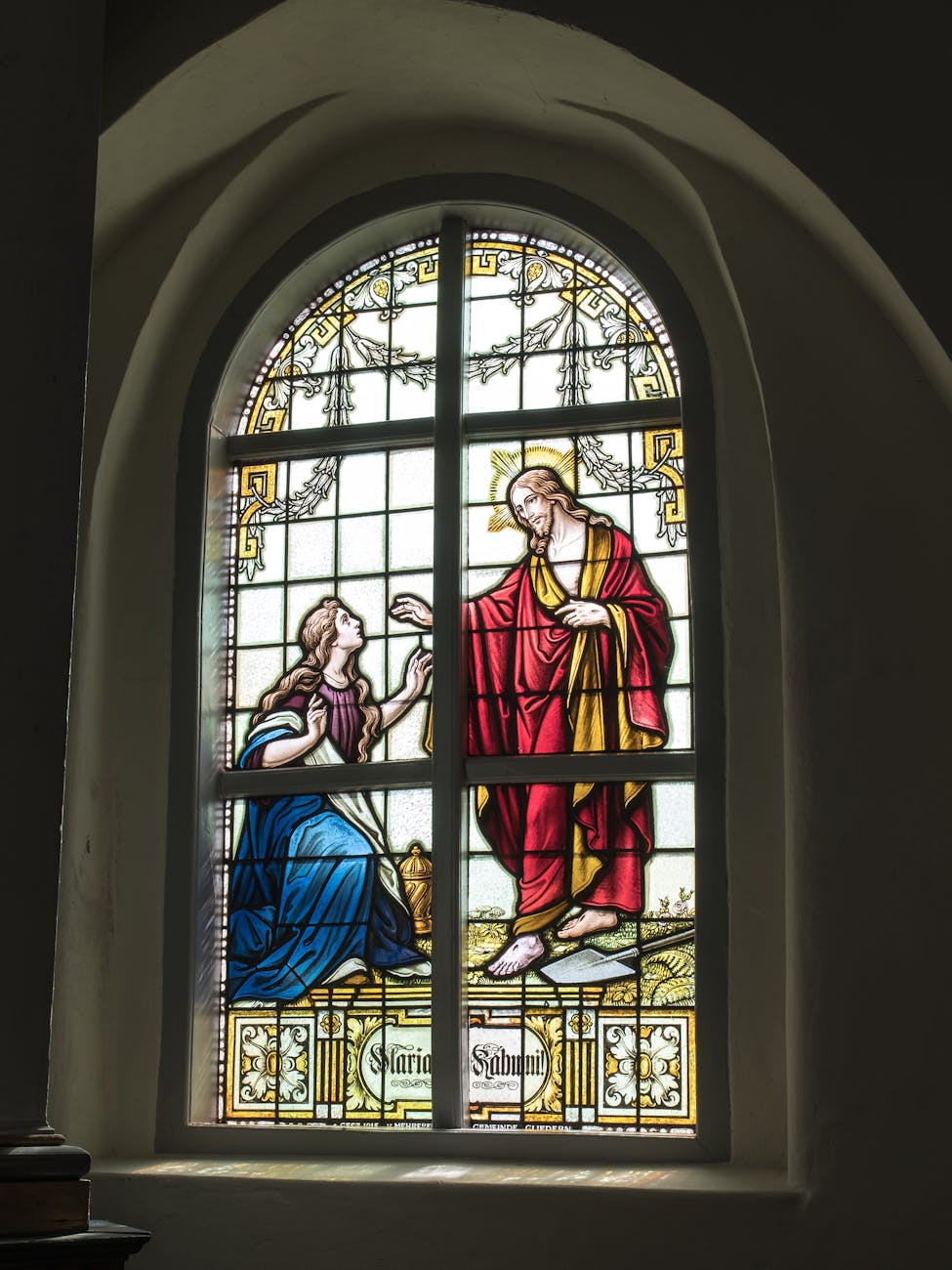
    Few biblical stories are more familiar to Christians than that of Easter. Most of us may not be able to remember which of the Synoptics describes two angels at the tomb versus one, but John’s account of that holy morning is quite distinctive. In the Fourth Gospel, it is one woman, Mary Magdalene, who discovers the empty tomb. She runs to tell the disciples, and Peter and “the disciple whom Jesus loved” race to the tomb—ostensibly leaving Mary to follow behind.

    When the two reach their destination, the beloved disciple is reticent to enter the empty tomb. Characteristically, Peter shows no hesitation, jumping in before he has any clue what’s going on. When the beloved disciple does enter, we are told that “he saw and believed” (John 20:8), but in the same breath, “for as yet they did not understand the scripture, that he must rise from the dead” (v. 9). We do not know what the beloved disciple believed, but it surely wasn’t the full picture, and he doesn’t seem to tell anyone about it.

    We must wonder if these two simply walk past the weeping Mary on their way to “return to their homes” (v. 10).

    Perhaps Mary’s stolid determination to remain at the tomb, to look into the maw of death (though she first hesitated), to try to grasp the situation, is what summons the two bright angels (v. 12). She is still asking the wrong questions, looking for the Lord in the wrong place. Yet even in her confusion, she is seeking Christ in love. Many a Christian will testify that those who seek this way, with aching want and misunderstanding, will find: “…a broken and contrite heart, O God, you will not despise” (Psalm 51:17b).

    Like so many of us, Mary Magdalene does not recognize Jesus when He appears to her. She has turned away from the angels to look for Him—isn’t it profound that she is hardly fazed by the presence of these shining divine messengers?—finds Him, but does not recognize Him. Again, she is asked why she is crying. Granted, Jesus asks a second, more pointed question: “For whom are you looking?” (John 20:15). This question intensifies the irony of her non-recognition, but it is also compassionate. He is leading her gently toward realizing the true object of her quest.

    Again, she answers that her Lord is gone. In line with the Lord’s question, she refers to Jesus, not his body. She believes Him to be dead, but has come to honor Him by performing the rituals of death, anointing the One who was spit upon, restoring care to the One who was put to the most shameful death. She believes that the powers of empire have taken His life away, but that she can still do something for Him if she can only find Him.

    In speaking to Jesus (whom she presumes to be the gardener (v. 15)), she does another odd thing we should notice. Instead of asking the “gardener” to bring Jesus back if he has moved Him, she simply asks that he point her in the right direction so that she can bring Him back. Now, the Gospels do not provide a physical description of Jesus or of Mary Magdalene. However, unless Jesus was extremely petite or Mary was a power lifter, it seems unlikely that she would have been able to carry His lifeless body back to the tomb. Maybe this demonstrates that in her grief, she either disconnected a bit from physical reality or simply ceased to care. I think it was probably both.

    Here comes the really good part: Jesus calls her name. Most obviously, this action demonstrates that He is not a stranger, but a friend. In addition, it harkens back to Jesus’s earlier words that the sheep recognize the voice of the shepherd, who calls them by name (John 10:3-4). It is in this same passage that Jesus proclaims, to the consternation of many listeners, “…I lay down my life in order to take it up again” (v. 17). His closeness with and love for the sheep are bound up with His willingness to die for them, which is itself bound up with His resurrection.

    Third, though the English translation does not represent this, we notice in the original Greek that Jesus does not call Mary by her usual name, transliterated as “Maria.” Instead, He calls her “Mariam” (John 20:16)—which is the spelling of “Miriam” in the Greek version of the Hebrew Bible. He is calling her a name that connects to their culture. He is calling her a new name known only to Him and her (see Revelation 2:17). Poignantly, He is connecting her to the figure in Exodus, the sister of Moses, who watches him as he floats down the river, protects him, even approaches the Pharaoh’s daughter to suggest that she return him briefly to the woman who is in fact their mother so he can nurse.

    Mary Magdalene has watched Jesus, the fulfillment of Mosaic law, the One chosen to lead all people out of slavery and into the promised land, as He floated down the river of death. She has stood in quiet confrontation with the empire by standing at the foot of the cross. Now she has come to anoint His body, but instead, by bringing the news of His resurrection to His loved ones, she will bring Him alive back to his mother.

    Upon hearing these words, the scripture says, she turns to Him and calls Him by a Hebrew name in return: “Rabbouni” (John 20:16). But wait—hadn’t she already turned? Didn’t she turn away from the tomb, and in doing so, see “the gardener”? What is this response to Christ’s calling of her (new) name? What is this second turn?

    Mary’s first turn is physical. With it, she ceases to look for the living among the dead (see Luke 24:5). This first turn is away from the dead end of the tomb to the One who is the Way, the Truth and the Life. It is in fact a turn to Christ.

    Her second turn is spiritual. With it, she sees and believes that Christ has risen from the dead. She recognizes Christ in front of her. She is abruptly made aware, through a loving call, of a salvation already won for her.

    Perhaps the first turn for many in Christian life is baptism. In it, we reject death and are reoriented toward life. However, especially if we are baptized as infants, we may not yet understand our salvation. Even those of us who come to Jesus as adults may not realize the full meaning of grace when we receive it. We may not yet be adept in recognizing Jesus.

    I venture to say that we experience our second turn, to greater or lesser degrees, many times over. This second turn is initiated by God, who calls our name in a way we’ll recognize, who carries the sheep back to the fold. It is an internal re-turning of a heart which, though already saved, is terribly forgetful. We are always already standing before the Lord. Yet, it takes a rotational miracle to convince us He’s alive.

    Even Christ’s death and resurrection could be seen as a first and second turn made on our behalf. On the cross, He redeems the world. But the resurrection is not just proof of death’s defeat, nor is Christ’s residence on earth before the Ascension just a victory lap. In Easter we find divine grace catching us up, sweeping us up, into what God has already done. The living Christ brings us not only to see and believe but to understand and to recognize. Ultimately, it is the awareness of our heavenly salvation that allows us to live into it on earth.

    In this Easter season and always, may we have the grace to recognize the living Christ everywhere we go. Amen.

  • Lenten Meditations with Dylan Thomas: Part 2

    Lenten Meditations with Dylan Thomas: Part 2

    A word of caution to readers: this piece contains descriptions of death.

    “Do not go gentle into that good night,

    Old age should burn and rave at close of day;

    Rage, rage against the dying of the light.”

    This is terrible advice. Particularly in a culture that can tend to prioritize length of life over quality, those who staff hospitals will tell you how much better it is when terminally ill people find the grace to transition from futile, painful treatments of their illness to gentle, good treatments of their pain. In the abstract, I think most people—granted that they’d live to be well and truly old—would choose to die peacefully surrounded by family rather than dramatically, surrounded by strangers who are alternating between shocking them with paddles and breaking their frail ribs with CPR. Raging against death is inadvisable.

    That’s the thing about this poem, though, isn’t it? It’s self-consciously terrible advice. In fact, it isn’t advice, really, but rather the plea of a son to his dying father. It speaks to us because we know we both want and dread the display it describes—from our loved ones, from ourselves:

    “And you, my father, there on the sad height,

    Curse, bless, me now with your fierce tears, I pray.”

    We want our elders to know peace, and we want to know peace ourselves one day. We don’t want to watch them struggle against the inevitable. And yet, we romanticize the idea of going down swinging. Moreover, we don’t want to watch the people who gave us life give up on their own.

    During my brief internship as a chaplain, I saw both kinds of death—not nearly as many times as most medical caregivers, and perhaps not nearly as many times as most individuals in human history, but enough times to claim a bit of insight. From my perspective, it seemed a wretched thing to die fighting. It seemed even more wretched when families forced such an end on people who didn’t want it.

    Yet, I rarely saw a truly peaceful death, let alone a death with dignity. There are those who do not know they are dying, either because a long battle with illness or drug addiction has ultimately robbed them of consciousness, or because some sudden violence left them braindead in an instant. But even those who consciously choose to stop all life-prolonging measures often die wide-eyed, reaching, and gasping. The first dead body I ever saw was that of a young man, frozen in this position. His mother could not bear to leave his side.

    “Thus says the Lord:

    A voice is heard in Ramah,

        lamentation and bitter weeping.

    Rachel is weeping for her children;

        she refuses to be comforted for her children,

        because they are no more.”

    Jeremiah 31:15

    This resistance to death is hardwired. Perhaps neither acceptance nor battle to the bitter end is particularly noble. Perhaps both are.

    But the question for many patients and family members, and for myself, is this: what approach to death is godly? If we believe, with the speaker of Thomas’s other most famous poem, that “death shall have no dominion,” if we proclaim faithfully that “though lovers be lost love shall not,” shouldn’t we resist our resistance to death? Shouldn’t we make peace with dying and be immune to grief? Is it even permissible to “rage, rage against the dying of the light”?

    I cannot tell you how many times I repeated to grieving Christian families, as they questioned their own faithfulness, that Jesus wept. That he healed the sick and raised the dead and valued earthly life, even as he preached the existence of a different kind of Life in a different kind of Kingdom. The same paradox applies to those who wonder why they cannot “make peace” with their own impending deaths. Matthew, Mark, and Luke all testify to Christ’s anguish at Gethsemane. He wanted to open the gates to eternal life—even more than we want to pass through them—but He did not want to die.

    As noted in my previous post, Paul sees death as the final enemy of God (1 Corinthians 15:26; for an illuminating exploration of how death and sin are presented in Paul’s letters as cosmic forces to be defeated, see When in Romans by Beverly Roberts Gaventa). God hears the blood of humanity crying out from the ground, and rages on our behalf (Genesis 4:10). It is inevitable for our fragile flesh to die, but ultimately it is not us but God, as Creator, Redeemer, and Sustainer, who refuses to surrender us to the dying of the light (John 1:5).

    One of the most revealing windows we have into the beliefs of early followers of Christ is 1 Thessalonians. It is considered by many scholars to be the earliest text in the New Testament. Like 1 John, it is written to a church that is deeply distressed, but for a different reason: these believers did not expect that anyone among them would die before Christ’s return. Paul had told them, we can surmise, that death would have no dominion. How and why had it begun stealing their compatriots?

    In this letter, Paul reassures the Thessalonians that these beloved, faithful souls will join them in God’s Kingdom: “For since we believe that Jesus died and rose again, even so, through Jesus, God will bring with him those who have died” (4:14)—literally, “those who have fallen asleep.” Their death, like Christ’s, is real, but it is not the end.

    But both the mourning and the dying must also hear the line before: “But we do not want you to be uninformed, brothers and sisters, about those who have died, so that you may not grieve as others do who have no hope” (v. 13). It’s not about whether these fledgling Christians should grieve—of course they will. It’s about the manner in which they do so: with hope. It is about the combination of raging against death and proclaiming that it shall have no dominion.

    For many of us, Lent is a time to contemplate death—it begins with the refrain, “You are dust; to dust you shall return,” ascends to Gethsemane, and reaches its peak at Golgotha. Yet this is also the time when we contemplate the means by which eternal life was won for us. It is when we pay attention to how we want to live our earthly lives, and how dependent we are on the Creator. Lent is the time when we hang all our hopes on the cross.

    So then, let us mark these last days of Lent with both of Thomas’s most famous poems. Let us glorify our Creator by raging against the dying of every precious light. Let even our “fierce tears” testify that God’s “mercies…are new every morning” (Lamentations 3:22-23). And still, as long as death exists, may we honor the deeply human need to “rave and burn at close of day.”


  • Lenten Meditations with Dylan Thomas: Part 1

    Lenten Meditations with Dylan Thomas: Part 1

    Like many a sensitive, sentimental reader, I’ve seen a few poems inscribe themselves on my heart. Two of those few are by Welsh poet Dylan Thomas (1914-1953): “And death shall have no dominion” and “Do not go gentle into that good night.” I was reminded of the former last Sunday.

    One of the lectionary readings that morning came from Romans 5, and (in the NRSV translation) contains this verse: “If, because of the one man’s trespass, death exercised dominion through that one, much more surely will those who receive the abundance of grace and the free gift of righteousness exercise dominion in life through the one man, Jesus Christ” (v. 17). The “one man” who trespassed is Adam—alongside Eve, of course. In their story, we see how humankind bucks the authority of the One who gives life, but in so doing submits to the power of death. Nevertheless, Christ—the Son of Man, whose arms outstretched on the cross embrace all humankind—lives, dies and rises to bestow life once more.

    Thomas’s poem actually draws on Romans 6:9: “We know that Christ, being raised from the dead, will never die again; death no longer has dominion over him.” The Greek word translated by the NRSV as “dominion” in Romans 5:17 is not the same as the one found in 6:9, but they are synonymous enough for us to say that a theme unifies these neighboring texts. Dominion, kingship, lordship, rulership, what have you—sin and death held power over humanity until Christ freed us for righteousness and life.

    Yet, it is painfully apparent to us all that sin and death still exist. Romans 6:9 refers to Christ, who has already experienced death. In 1 Corinthians 15, another text contrasting Adam and Christ, Paul writes that the risen Jesus is “the first fruits of those who have died” (v. 20). Christ is victorious over death, but the results of this rescue of the universe are still unfolding: “For he must reign until he has put all his enemies under his feet. The last enemy to be destroyed is death” (vv. 25-26).

    It makes sense, then, that Dylan Thomas’s presumably non-divine speaker uses the future tense: “And death shall have no dominion.” He isn’t talking about Christ, the first fruits, but the others awaiting resurrection. The fallen fruits, rotting at the base of the tree.

    That may be grotesque, but it’s certainly in the spirit of things. The poem discusses the long-dead: “When their bones are picked clean and the clean bones gone.” It speaks of the tortured: “Twisting on racks when sinews give way.” It glories in bluntness: “Though they be mad and dead as nails.” These same hopeless, humiliated deceased will rise to such a status that death itself is beneath them.

    1 Corinthians 15 is hardly different. Paul says to those who struggle to understand resurrection, “Fool! What you sow does not come to life unless it dies. …What is sown is perishable; what is raised is imperishable. It is sown in dishonor; it is raised in glory. It is sown in weakness; it is raised in power.” (v. 36; 42b-43). Explaining that a resurrected body can hardly be compared to our current bodies, he points out that there are many kinds of “flesh” on earth, a vast difference between earthly and heavenly “bodies,” and “…indeed, star differs from star in glory” (v. 41). It seems to me, then, that Paul would appreciate the poem’s imagery:

    They shall have stars at elbow and foot;

    Though they go mad they shall be sane,

    Though they sink through the sea they shall rise again;

    Though lovers be lost love shall not;

    And death shall have no dominion.

    This poem can speak of resurrection without sounding trite because it is so unflinching in its recognition of death. We can believe the speaker when he articulates humanity’s eventual victory because he so vividly describes its current defeat. Similarly, we can believe Christ’s articulation of eternal life because he himself died. Christ is no longer vulnerable to death, but that only means something to us because he once was. He once took on flesh like Adam’s. He once was tempted, tortured, put to shame, subject to every human suffering; he no longer is. We are still subject to suffering; we will not always be.

    As hinted in Romans 5, the text that prompted this reflection, we humans too often subject ourselves to the suffering of sin. Indeed, sin and death continue to plague us, and will only be brought to nothing at the last day. But the good news of Christ is not only that we will get to live with God in the end, but that we have the freedom to live to God now.

    “Though lovers be lost love shall not.” Knowing that love—bound up with justice, mercy, and the free gift of righteousness—is imperishable, “…let us love, not [only] in word or speech, but in truth and action” (1 John 3:18), for through love alone do we join in Christ’s victory over death.