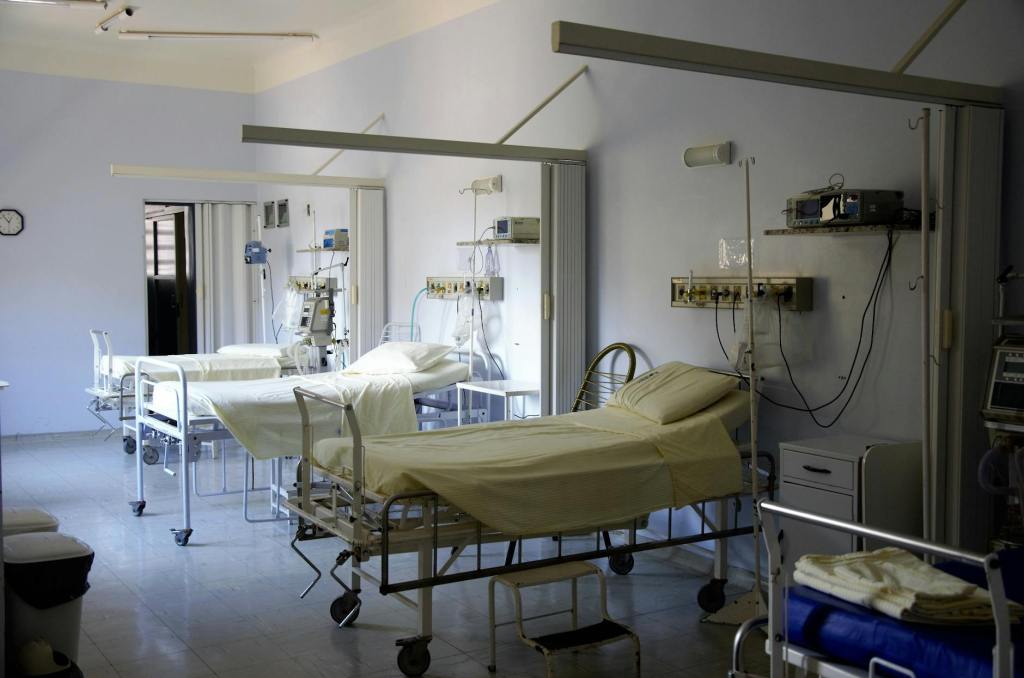
When I first moved to Durham, North Carolina in August of 2020, my very dear roommate had recently finished a summer of Clinical Pastoral Education. In lay terms, she had just worked for three months as a hospital chaplain. The CPE program throws its participants in headfirst as they learn how to provide spiritual care partly through classroom lessons, but mostly through patient room experiences—and occasionally emergency room and even operating room experiences. I greatly admired her fortitude in completing this program, and hardly wondered at the fact that she talked about it all the time.
Then, this past summer, I did it myself, and now I completely understand why CPE seemed relevant to every conversation my roommate and I had in the first few months of our friendship. I understand why so many of the Episcopal priests I know still tell tales from their time working in hospitals and hospices multiple decades hence. I myself talk about it all the time.
It wasn’t until now, however, that I have found the disposition, the courage, to write about it. Indeed, I shouldn’t credit myself too much, because as of this week, I have no choice but to write about it—on a resume, that is. I find myself floundering to communicate—let alone communicate concisely—what it is that I did last summer. The first experience that came to mind is the one that somewhat disturbed even my roommate: getting other people’s blood on me. Granted, this was not very much blood, and it was largely confined to my gloved hands and the bottoms of my shoes. Countless medical workers deal with a much higher volume of bodily fluids each day without batting an eye. (One ER nurse told me quite nonchalantly that she wears a plastic cap whenever gunshot victims roll in, as she has a pet peeve about getting blood in her hair.) Perhaps my small brushes with blood only stood out to me because they stoked an unearned sense of self-importance.
At the same time, I do believe they had a lesson to teach: kindness in this life is dirty work. The marks of disease and the wounds of trauma are ugly. Cries of pain and gasps for air are wretchedly unmusical. Death has a foul smell, and, on a bad day, it sticks to you. The wail of a mother bereaved of her child sticks to you. Perhaps this experience echoes so persistently in those who undergo it because its sound is that of humanity, concentrated. It shouts the oxymoronicity of “mortal life.” Existence here, presence here, caring here is dirty work.
We know that God is light and life and goodness and beauty. But this truth somehow does not prohibit God from being present with us in the dark, dirt, blood, dinge, badness, ugliness, and death. In fact, if the stories we tell about Christ are to be believed, God trudged through this dirt, held the ugly, foul-smelling, and diseased, and not only got blood on His hands and shoes but bled from hand, foot, and side, proceeding himself to die in agony. The point of this act was not to glorify suffering. On the contrary, it proved to the weary human race that there is no depth of abjection God will not transcend—no place God will not go with us.
On occasion, a patient would ask me to read scripture to them. To one patient facing death and one at death’s door, I read a passage from Romans 8. Here, Paul lists several potential causes of distress, both natural and supernatural, including death. “I am convinced,” he declares, that neither these, “nor anything else in all creation, will be able to separate us from the love of God in Christ Jesus our Lord” (v. 38-39). Grief is ample evidence that death does not sever the bonds of human love. These bonds are painfully stubborn—if pressed, we’d likely admit we wouldn’t have it any other way. But Paul says more. He makes the outlandish claim that nothing can separate us from divine love, the love that creates, redeems, and sustains all things. There is no place that this unspeakably holy love, the foundation of existence, will not go with us, including the experience of annihilation itself. This purest force is determined to do the dirty work.
There were times last summer when I was surprised how far into these depths a family would let me accompany them. I felt such awe and gratitude that a stranger would ask me to sit with them, hear their stories, and lead them in prayer on the worst or the last day of their life. I realize now how wise they were to extend such an invitation. It was not me they were inviting, but God—the very God whose love permits no separation. Too often, those of us who proclaim Christ’s birth, ministry, death, and resurrection fail to welcome Him. We assume God does not belong in the splintering shame of our hearts. But at our utter breaking points, we may remember that this is exactly where God desires to be. Birth in a stable, death on a cross—bloody, dirty, chosen willingly.
We are strangely accustomed to seeing images of Christ in the manger or on the cross. Many in the world are accustomed to seeing human blood, suffering, and death, while I have had the immense privilege not to be. Rather few of us are accustomed to seeing Christ in a trauma bay or hospital waiting room. I have seen Him there, but I am not accustomed to it; I do not plan to be. I pray never to stop feeling the hurt of doing the dirty work. I pray never to stop being astonished by where God, with love made manifest in many gloved hands, decides to go. If my prayers are answered, I may never stop talking about CPE.


Leave a Reply